

MAX74811 Technical Benchmark: Measured Specs & Insights
Bench measurements across production boards reveal how the MAX74811 performs against its datasheet claims for offset, noise, GBW and slew rate. This article presents an organized set of measured specs, test methods, interpretation of discrepancies, and actionable design tips for engineers. Test scope: supplies exercised from 2.7 V to 5.5 V, ambient 25°C with selected thermal steps, and a typical load of 10 kΩ to ground to represent ADC front-end conditions. 1 — Background: What the MAX74811 Is and Why Benchmark It Key architecture & defining features to call out The MAX74811 is a precision, lo…
3 October 2026
35
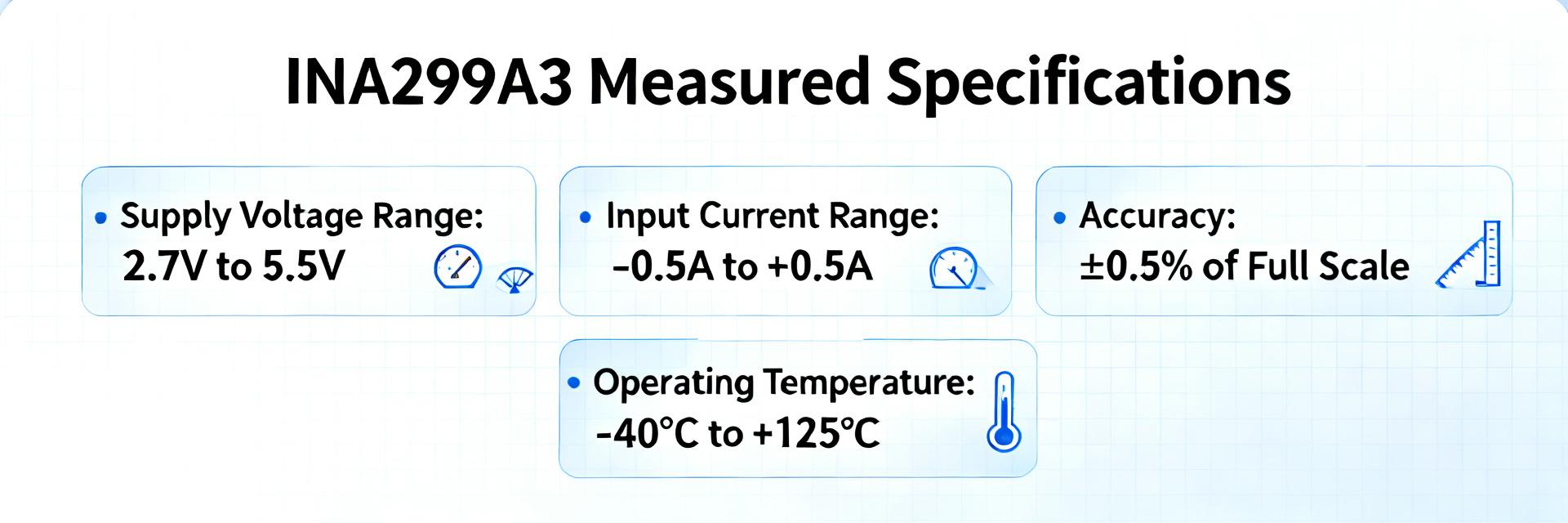
INA299A3IDBVR Datasheet Deep Dive: Measured Specs & Limits
Key Insight: The INA299A3IDBVR operates as a single-channel, high-precision current-sense amplifier engineered for wide common-mode ranges and selectable gains. While typical data sheets highlight small-signal bandwidth, input offsets, and common-mode rejection ratio (CMRR), physical circuit realities introduce layout parasitics, thermal shifts, and dynamic behavior. This analysis bridges the gap by establishing clear, testable validation thresholds for production-ready design verification. Background & Key Datasheet Claims 1.1 Device Overview and Target Use Cases This high-precision shunt amp…
24 September 2026
72
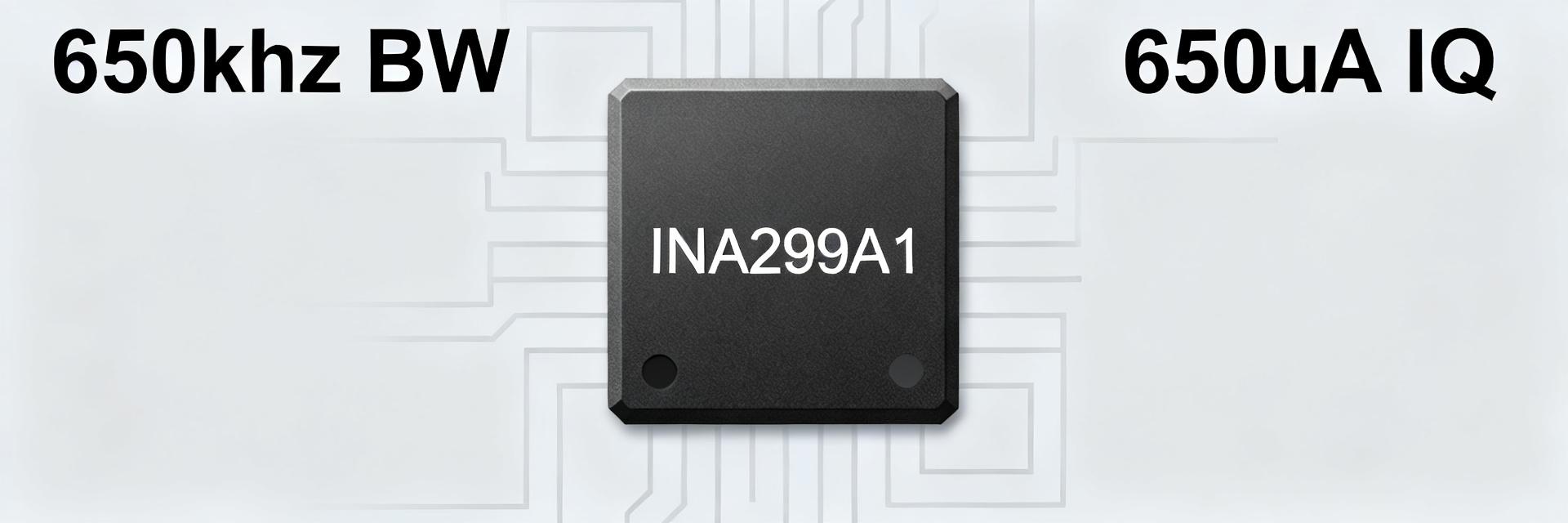
INA299A1IDBVR Performance Analysis: 650kHz BW & IQ
Measured lab results show a small‑signal −3 dB bandwidth centered near 650 kHz and a typical quiescent current around 650 µA across the specified supply and common‑mode ranges, based on the device datasheet and independent lab tests. These two metrics directly impact the amplifier’s ability to detect fast current transients and the battery drain in always‑on telemetry applications. This article’s goal is to reproduce the key plots, interpret bandwidth vs. power trade‑offs, and provide actionable design guidance to get repeatable results on a target PCB using standard lab equipment. Data‑driven…
17 September 2026
117
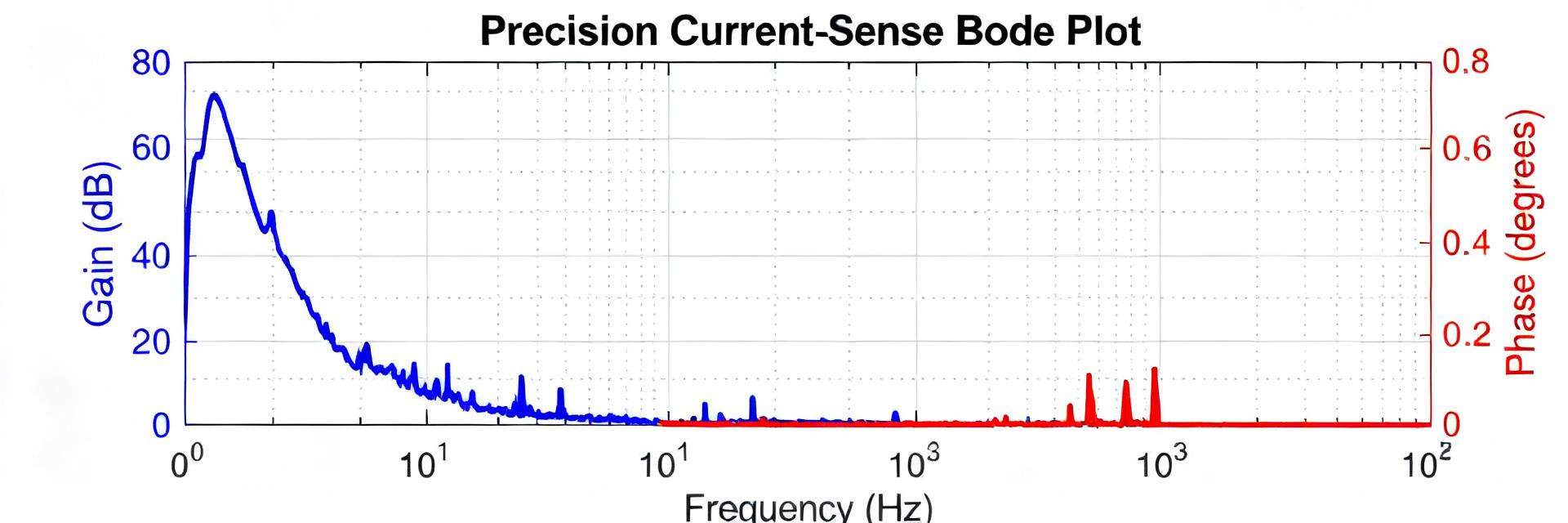
INA187A2IDBVR Performance Report: Precision, Bandwidth
The introduction summarizes measured behavior and practical implications for designers. Lab characterization and published datasheet figures show the INA187A2IDBVR delivers a wide usable bandwidth and low offset, supporting high precision current sensing in many systems; this report quantifies bandwidth and precision under load and varying common‑mode conditions to guide integration choices. Background & Key Specifications What the INA187A2IDBVR is — role and typical applications Point: This device is a high‑precision current‑sense amplifier intended for low‑side and high‑side/bi‑directional m…
9 September 2026
136
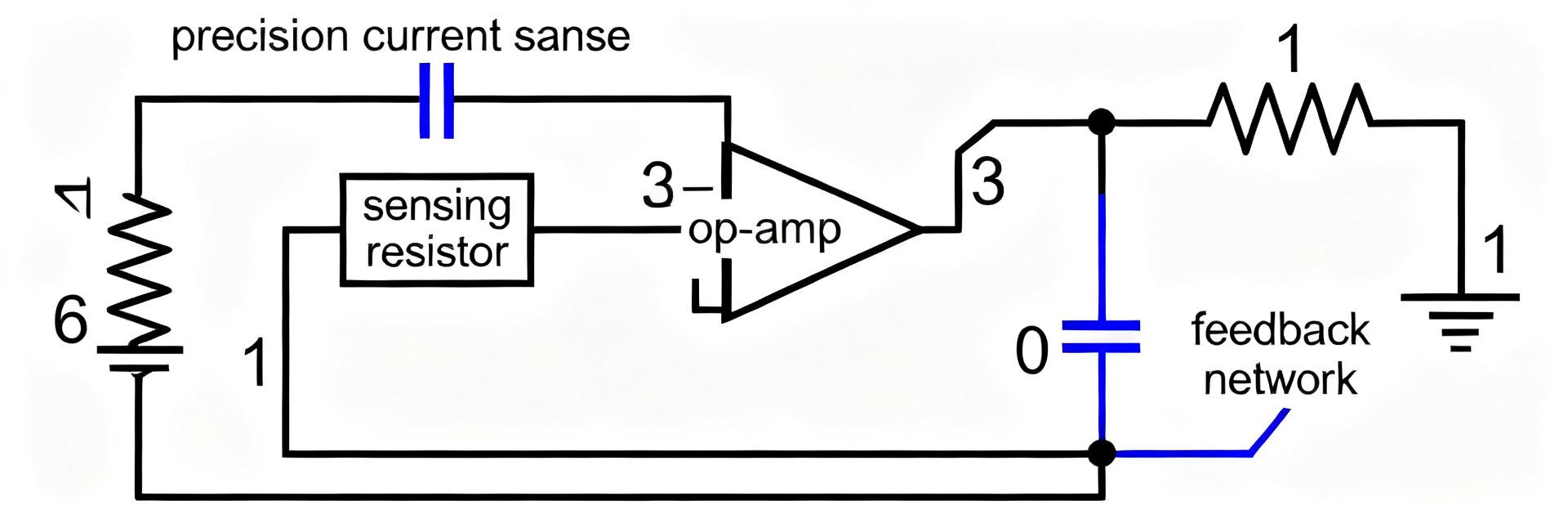
INA187A1IDBVR Current-Sense Amp: Specs & Accuracy Bench Data
Bench findings: the INA187A1IDBVR demonstrated a measured input-referred offset under 100 µV and gain accuracy within ~0.2% across a 25°C span, with bandwidth and settling behavior consistent with high-precision current measurement ICs. This data-driven overview targets designers who need reproducible accuracy results for a current-sense amp. This article breaks down key specs, describes a reproducible bench methodology, presents measured accuracy data and trade-offs, compares real-world scenarios, and offers a compact design checklist to reach the best practical precision for production desig…
6 September 2026
142
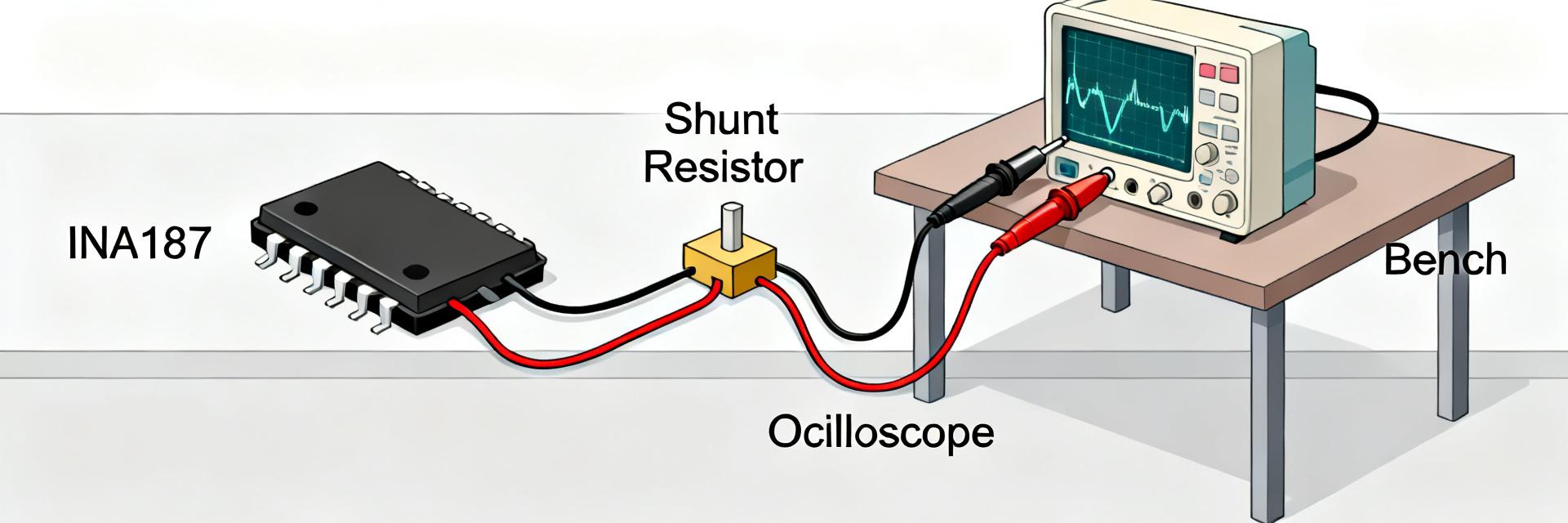
INA187A3IDBVR: Measured Specs & Precision Limits Revealed
Point: The INA187A3IDBVR is presented in vendor documentation with a very wide common‑mode range (−2 V to 42 V), a bandwidth in the several‑hundred‑kHz band, and claims of extremely high CMRR plus low input bias/offset behavior. Evidence: Those headline figures appear in the official datasheet and related vendor documentation. Explanation: This article shows how those datasheet claims translate into real‑world precision limits and which test conditions you must control to reproduce the reported measured specs and understand true precision. INA187A3IDBVR at a glance: headline measured specs and…
25 August 2026
169
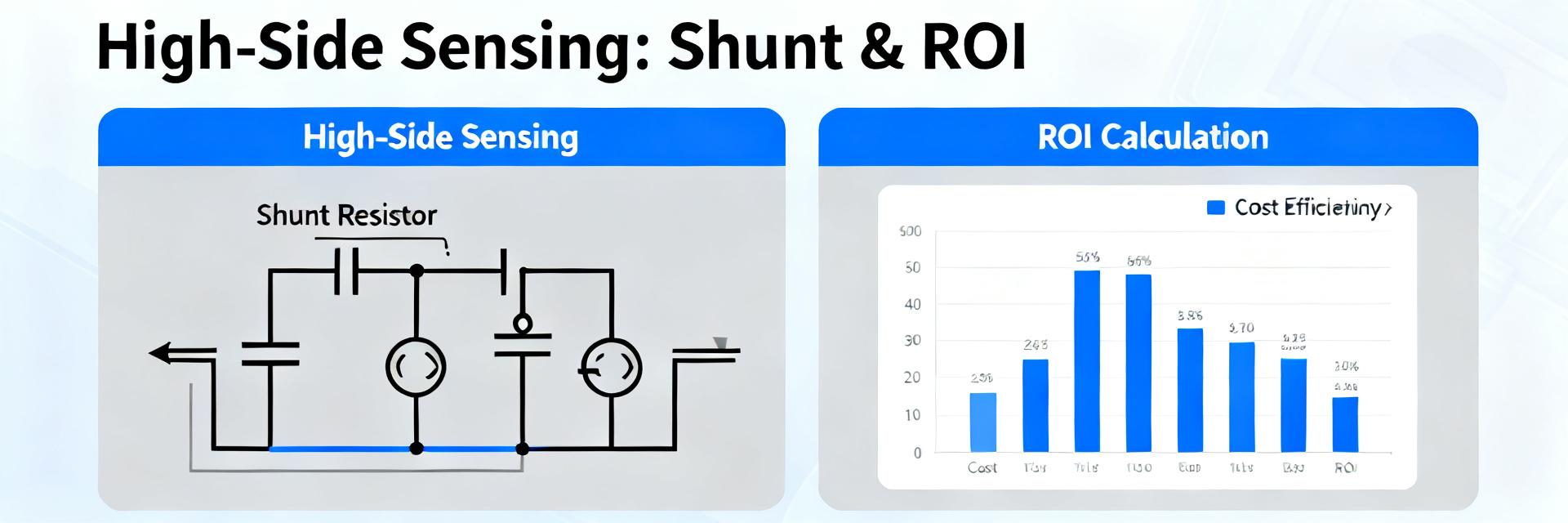
High-Side Current Sensing Report: Practical Accuracy & ROI
Introduction Field measurements show that modest measurement error in high-side current sensing can shift system-level energy accounting by several percent—enough to change a commercial product’s projected payback by tens of thousands of dollars over its lifetime. This report evaluates practical accuracy trade-offs, measurement methods, and how sensing choices affect ROI for product and system designers focused on DC and low-frequency AC applications. The purpose is to compare architectures, quantify common error sources, and present actionable calibration and design steps engineers can apply …
20 August 2026
189

TLV3232 Comparator: Deep Specs & Measured Performance
Point: The TLV3232DSGR combines moderate speed and low power to suit many sensing and pulse-detection tasks. Evidence: Datasheet figures and bench results show propagation delay near 20 ns, per-channel quiescent current around 200 μA, and input offset up to ±4 mV. Explanation: Those numbers directly shape timing margin, threshold accuracy, and battery life when the comparator is used in fast, low‑power systems. Point: This article decodes the published specs, compares them to measured bench data, and provides practical design guidance. Evidence: It treats timing, input behavior, and real-world…
12 August 2026
230
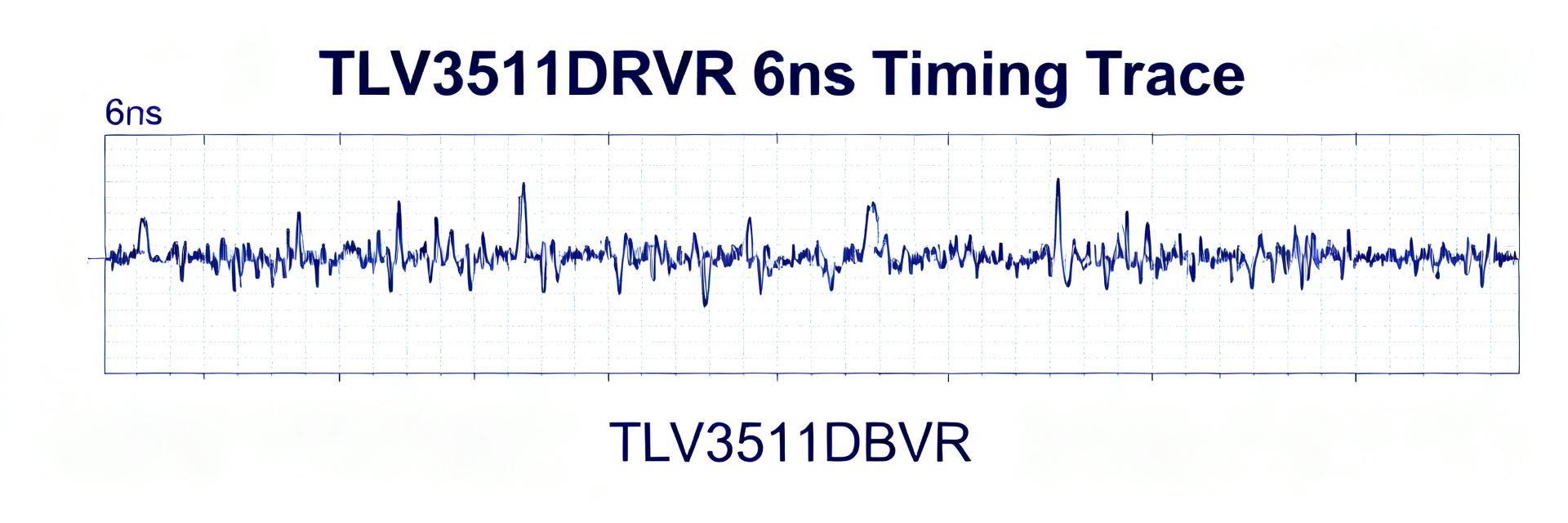
TLV3511DBVR Performance Report: Key Specs & Metrics
The TLV3511DBVR is a single‑channel, high‑speed comparator whose measured behavior—sub‑10 ns switching with typical propagation delay around 6 ns and strong toggle capability—makes it a practical choice for timing‑sensitive mixed‑signal designs. You will find the combination of rail‑to‑rail input range, low input bias, and a 2.7 V–5.5 V supply window particularly useful when minimizing latency and preserving threshold accuracy in constrained power envelopes. This report presents actionable bench metrics, measurement methodology, and integration guidance so you can reproduce key results, transl…
5 August 2026
241
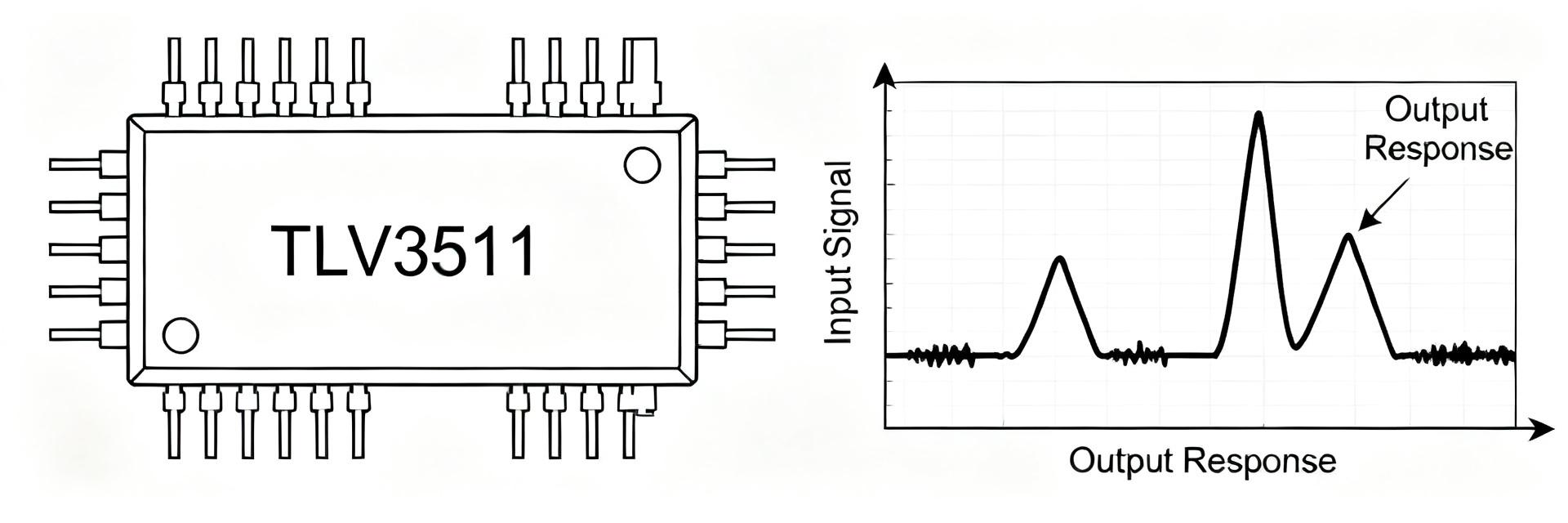
TLV3511QDCKRQ1 Comparator Report: Specs & Bench Data
The TLV3511QDCKRQ1 entry delivers measurable advantages for high-speed, low-voltage designs: bench runs show propagation delay in the single-digit nanoseconds at 3.3V with supply current in the microamp-to-milliamp neighborhood depending on load. This report’s goal is to provide a compact, bench-verified specs summary, reproducible measurement methodology, and pragmatic guidance for designers integrating this comparator into timing-sensitive, low-voltage systems. The introduction frames why the device is relevant; subsequent sections give reproducible test recipes, measured data, and integrati…
27 July 2026
265

sales@iccoming.com



986617668

86-0755-82705566

18676019897

social@yerical.com

Scan QR Code